.png)
Once a brand decides to take affiliate marketing seriously, one of the first operational questions is who should actually run the program.
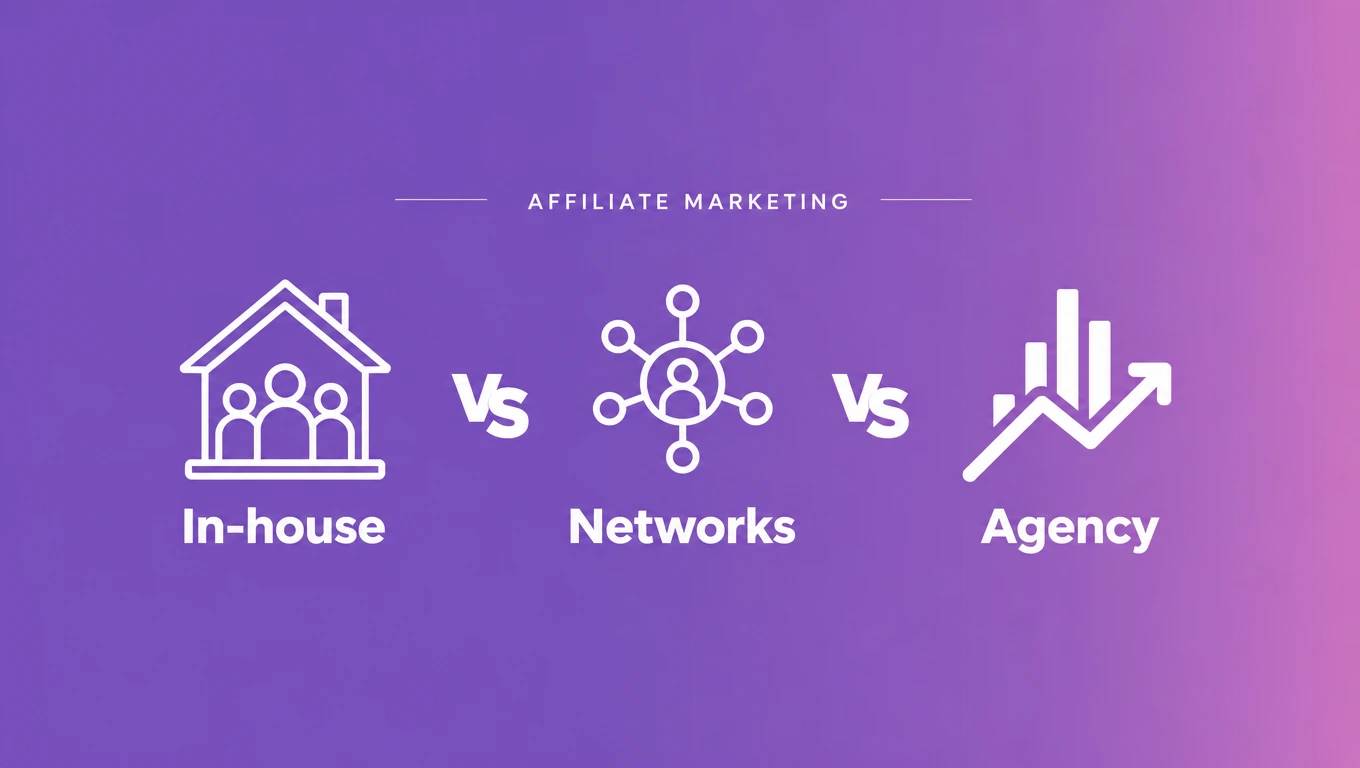
Should the brand join an affiliate network and manage the channel internally? Should it build a dedicated in-house team? Should it work with an affiliate marketing agency? Or should it combine elements of all three?
There is no universally superior model.
Affiliate networks, technology platforms, agencies and internal teams solve different parts of the operating problem. The right choice depends on how mature the program is, how much internal capability already exists, what type of publishers the brand wants to work with, how complicated the tracking and validation requirements are, and how much management attention the channel will receive after launch.
For brands looking for an affiliate marketing company in India, the first step is understanding what kind of provider they actually need. An affiliate marketing agency manages strategy, partner recruitment, activation, tracking, validation and optimisation on the brand’s behalf, while a network or platform primarily provides infrastructure, technology and access to partners.
For Indian D2C and ecommerce brands in particular, the decision should be based less on labels and more on the operating system required to build a productive partner channel.
The Models Overlap More Than They Appear
The traditional comparison between "network versus agency" can be misleading because modern affiliate programs often use both.
An affiliate network or partnership platform can provide important infrastructure including tracking, reporting, partner discovery, contracting, commission rules and payment workflows. Some providers offer largely self-managed plans, while others also provide account management or additional strategic support.
An agency operates differently. Its role is typically to manage the commercial and operational development of the channel, which can include strategy, partner recruitment, outreach, activation, commission planning, promotional calendars, compliance monitoring, reporting and optimisation.
An in-house team can perform many of those same management functions while using a network or tracking platform for technology.
This means the real decision is not always between three completely separate products. It is often about deciding who owns the technology, who owns the relationships and who owns day-to-day execution.
Comparing the Operating Models
A useful comparison should focus on the capabilities each model can realistically provide rather than assuming that one is automatically better.
| Factor | Network or Platform-Led | In-House Management | Agency Management |
|---|---|---|---|
| Best suited to | Brands needing infrastructure and partner access. | Brands with sufficient internal capability and channel scale. | Brands needing specialist execution without building the full function internally. |
| Strategic control | Depends on internal ownership and service level. | High. | Shared between the brand and agency. |
| Partner recruitment | Marketplace and network access can support recruitment. | Depends on internal relationships and outreach capability. | Depends on the agency's relationships and recruitment capability. |
| Day-to-day activation | Varies by service tier and the brand's internal effort. | Strong when the function is properly resourced. | Strong when active partner management is included in scope. |
| Technology | Usually built into the network or platform. | Requires a network or separate tracking platform. | Usually operates through the brand's chosen network or tracking platform. |
| Internal workload | Moderate to high for self-managed programs. | High. | Lower, but the brand still needs an internal owner. |
| Compliance oversight | Tools and controls may be available depending on the provider. | Managed internally. | Can be managed jointly by the agency and brand. |
| Cost structure | Platform, network and service fees vary by provider. | Includes people, technology and operating costs. | May include retainers, project fees, hybrid models or performance-linked structures. |
| Main risk | Assuming partner access will automatically create activation. | Under-resourcing the function or spreading ownership too thin. | Choosing a partner without sufficient specialist capability or proactive execution. |
The table is a starting point rather than a rulebook. A managed network service can sometimes provide deeper execution than a lightly involved agency, while a strong in-house team can outperform either if it has the relationships, technology and resources required.
When a Network Makes Sense
A network or partnership platform can be a sensible starting point when a brand needs the technical infrastructure required to operate an affiliate program.
Tracking needs to identify eligible partner activity. Transactions need to be recorded and validated. Commission structures need to be applied consistently. Publishers need somewhere to discover or join the program, and reporting needs to give the advertiser enough visibility to understand performance.
Modern platforms can also support recruitment workflows, partner segmentation, automated communication, promotional tools and more sophisticated tracking approaches.
The limitation is not that networks are "just platforms." That description is too simplistic because some networks offer account management and strategic services in addition to infrastructure.
The more useful distinction is between access and activation.
Being visible to publishers does not guarantee that the publishers a brand actually wants will join, produce content, negotiate placements or consistently promote the program. A self-managed network model works best when someone inside the business has enough time and expertise to actively develop those relationships.
A network-led approach can therefore suit brands that already have an experienced affiliate manager or a broader performance team capable of owning recruitment, optimisation and partner communication.
When In-House Makes Sense
Building affiliate management internally provides the greatest direct control over the program.
The brand owns publisher approvals, commercial terms, promotional priorities, attribution decisions, validation, reporting and partner communication. The affiliate function can also work closely with finance, ecommerce, CRM, performance marketing, category and merchandising teams.
That proximity can be especially valuable when affiliate marketing has become a meaningful revenue channel.
However, an in-house model requires more than assigning affiliate marketing to an existing performance marketer.
Someone needs to recruit partners, respond to applications, negotiate commissions, maintain relationships, coordinate promotions, review transaction quality, investigate compliance issues, interpret reporting and work with technical teams when tracking problems arise.
As the program expands into content publishers, creators, cashback partners, coupon platforms, comparison sites and other partnerships, the workload becomes increasingly specialised.
In-house management therefore tends to make the most sense when the expected strategic value of the channel justifies dedicated capability and the organisation is willing to invest in it properly.
When an Agency Makes Sense
An affiliate marketing agency can be useful when a brand wants active channel development but does not want to build the entire operating function internally.
The strongest agency use case is not simply "outsourcing affiliate marketing." It is gaining access to specialist execution that the brand does not currently possess.
That may include finding relevant publishers outside the brand's existing network, approaching partners directly, negotiating placements, activating inactive publishers, developing commission strategies, coordinating creator-affiliate relationships and monitoring promotional behaviour.
Publisher relationships matter because the strongest partners are not always the easiest partners to recruit. A category-specific editorial publisher, commerce community, comparison platform or creator may receive opportunities from many advertisers. Getting the program listed is different from convincing that partner to actively prioritise the brand.
This is one genuinely useful point from the older Creative Cuddle article: publisher access is not the same as publisher activation.
The agency model has risks as well. An agency that simply places the brand on existing networks and waits for applications adds limited value. Brands should understand how the agency recruits partners, how much of the work is proactive, who owns the relationships and how clearly performance is reported.
Technology Still Matters
Regardless of who manages the program, the brand needs reliable affiliate technology underneath it.
Tracking has become more technically demanding as browser restrictions, ad blockers and changing privacy environments affect traditional cookie-based measurement. Current affiliate platforms increasingly support first-party, hybrid and server-to-server approaches designed to improve tracking reliability.
The operating model should therefore include clear ownership of technical implementation.
Someone must know whether tracking is working, how transactions are attributed, how coupon codes are handled, whether mobile-app activity needs to be captured, and how changes to the ecommerce stack affect affiliate measurement.
Using an agency does not eliminate the need for technology. Building an in-house team does not mean building tracking software from scratch. The brand still needs an appropriate platform or network and clear responsibility for its implementation.
Publisher Relationships Need Active Ownership
One of the strongest predictors of how useful an affiliate operating model will be is whether someone is actively responsible for partner development.
Recruitment is not finished when a publisher accepts the program.
Partners need relevant commercial terms, accurate product information, promotional calendars and a reason to allocate traffic or content to the brand. Strong performers may need negotiated commissions or exclusive opportunities. Inactive partners may need reactivation. New publisher categories may need different outreach and onboarding processes.
Current partnership platforms themselves treat recruitment as an active funnel involving prospecting, communication, proposals and ongoing partner engagement rather than a passive marketplace process.
Whether that work belongs to the network's service team, an in-house affiliate manager or an agency matters less than whether it is actually happening.
Commission and Validation Need Commercial Context
Commission design is another area where brands need active management rather than a fixed setup.
Different product margins, customer types and publisher roles may justify different commercial structures. A content publisher introducing new demand may need to be evaluated differently from a coupon partner that primarily appears near conversion.
Validation also requires coordination with the business.
For Indian ecommerce brands, cancelled orders, returns and Cash on Delivery activity can affect whether a transaction should ultimately remain commissionable. Poorly designed validation rules can cause the brand to overpay for invalid transactions or unfairly reject legitimate partner sales.
The team managing the program therefore needs access to enough commercial and operational information to make sensible decisions rather than treating affiliate reporting as an isolated dashboard.
Compliance Cannot Be Outsourced Completely
Every operating model needs governance.
Brands should establish policies around trademark bidding, promotional codes, misleading claims, unauthorised creatives, sub-networks, publisher transparency and other practices relevant to the program.
Creator-affiliate activity adds another consideration in India. ASCI requires disclosure when an influencer has a material connection with an advertiser, and affiliate relationships fall within that framework.
A network may provide compliance tools. An agency may actively monitor publishers. An internal team may control approvals directly.
None of those arrangements removes the advertiser's responsibility to understand how its brand is being promoted.
Compliance is therefore another area where the question should be ownership rather than assumption.
How Should a Brand Choose?
The most useful way to choose an affiliate management model is to begin with the work that needs to be done.
Does the brand primarily need infrastructure? Does it already have someone capable of managing partners every week? Does it have established publisher relationships? Can the internal team manage tracking, validation and compliance? Is creator-affiliate activity part of the strategy? Is the program mature enough to justify a dedicated hire? Does the business want external execution while retaining internal strategic control?
A network-led model can work well when the brand already has internal affiliate capability. An in-house team can be the right choice when the channel is strategically important enough to support dedicated expertise. An agency can make sense when active recruitment and specialised management are needed but building the entire function internally is not yet practical.
A hybrid structure can combine those strengths, but it should be chosen because the responsibilities fit the business, not because hybrid automatically means better.





.png)