.png)
ChatGPT is no longer just a place where people ask questions. It is becoming a discovery platform.
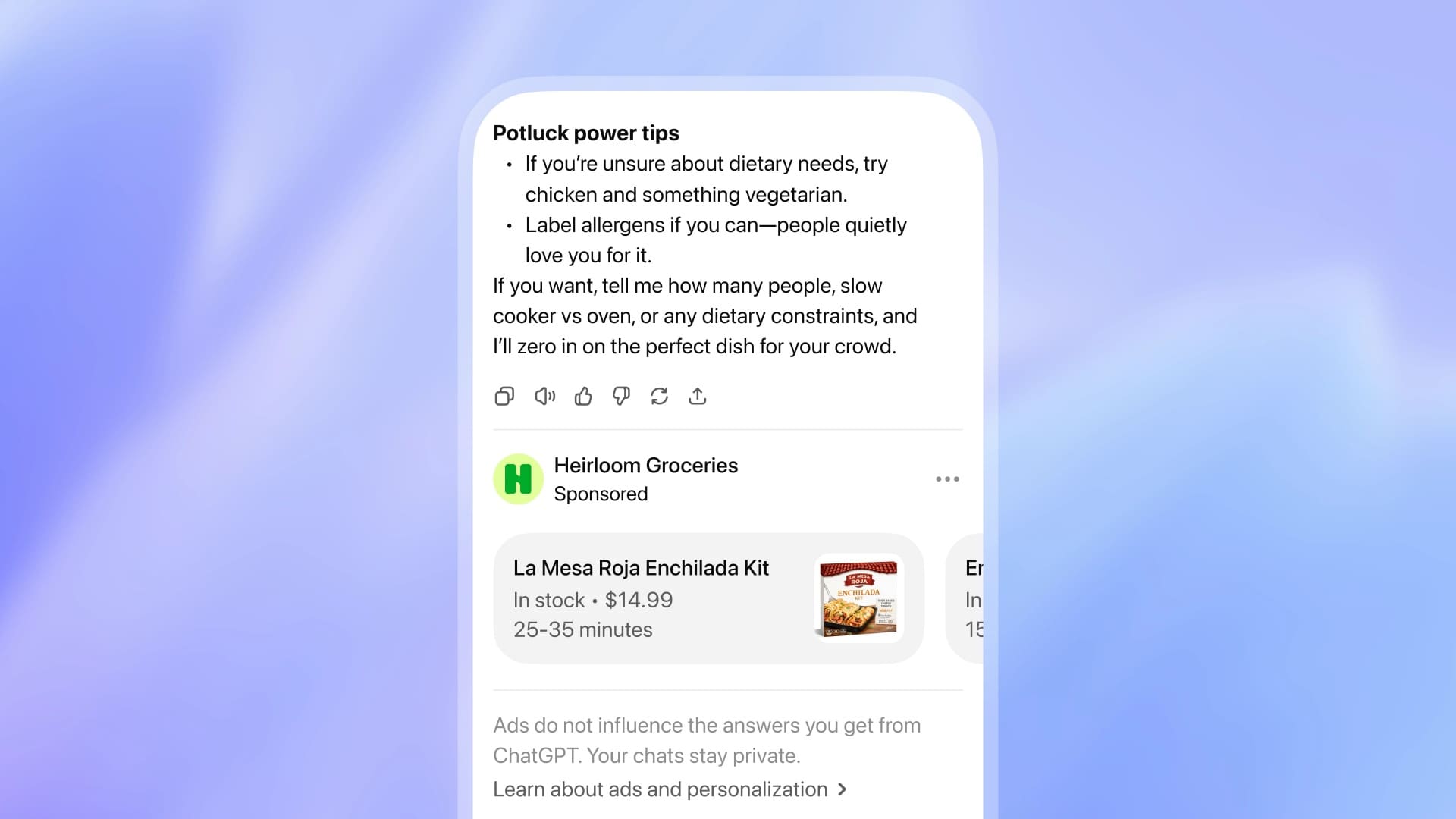
OpenAI has started testing ads in ChatGPT for Free and Go users, with sponsored placements clearly labelled and separated from organic answers. OpenAI has also stated that ads do not influence ChatGPT’s answers and that conversations are kept private from advertisers. More recently, reports from Digiday and Affiverse indicated that OpenAI has switched on cost-per-click advertising inside ChatGPT, with advertisers reportedly able to bid on clicks rather than only impressions.
For Indian brands, this is bigger than a new ad placement.
It signals a shift in how consumers may discover products, compare brands, and make purchase decisions. Search has already changed from typing keywords into Google to asking AI tools for recommendations. Now, if paid placements enter that journey, brands will need to rethink how they appear inside AI-led discovery.
Why This Matters for Indian Brands
Indian consumers are already research-heavy before buying. Whether it is skincare, fashion, electronics, travel, wellness products, financial apps, home decor, or SaaS tools, people compare options before making a decision.
They search for things like:
- “Best sunscreen for Indian skin”
- “Affordable ethnic wear brands in India”
- “Best luggage brand for international travel”
- “Best protein powder under ₹2,000”
- “Best CRM for Indian startups”
- “Best washing machine for a small family”
- “Is this brand worth buying?”
Until now, these journeys were mostly influenced by Google results, YouTube reviews, Instagram creators, coupon sites, Reddit threads, comparison blogs, marketplace reviews, and affiliate publishers.
But AI tools are changing this journey.
A user may now ask ChatGPT to shortlist brands, compare options, check pros and cons, suggest budget-friendly alternatives, explain product differences, and recommend what to buy. The customer may not visit ten websites anymore. They may trust one AI-led summary and click only one or two links.
That is why Indian brands should pay attention.
From Search Results to AI Recommendations
Traditional search gives users a list of links.
AI search gives users an answer.
This difference matters because a consumer does not just discover brands anymore. They are guided through a decision.
For example, someone planning to buy skincare may ask:
“What is the best vitamin C serum for oily skin in India?”
Then they may follow up with:
- “Which one is better under ₹1,000?”
- “Which brand has better reviews?”
- “Which one is safer for sensitive skin?”
- “Can you suggest Indian brands only?”
- “Where can I buy it?”
This creates a deeper purchase journey inside the AI conversation itself.
For brands, the opportunity is clear: if your brand appears in that consideration set, you gain early influence. If your brand is missing, your competitors may own the conversation before the customer even reaches Google, Instagram, or Amazon.
The Impact on India’s Affiliate & Comparison Ecosystem
India has a massive ecosystem of affiliate publishers—think of sites like MySmartPrice, CashKaro, or lifestyle bloggers. These players have traditionally been the bridge between a user's question and a brand's product.
The Risk:
If ChatGPT provides the answer and the direct link via a PPC ad, the middleman (the affiliate) is bypassed.
The Strategy:
Indian brands must re-evaluate their affiliate commissions. If you start spending heavily on ChatGPT ads, you might see a dip in affiliate-driven sales. The brands that win will be those that integrate AI ads as a supplement to their affiliate networks, not a replacement.
Localizing for the Indian Context
One of the biggest advantages for Indian brands will be ChatGPT’s ability to handle Hinglish and regional nuances.
As the PPC model matures, we expect to see brands bidding on queries that are uniquely Indian—from "best heavy-duty AC for Delhi summers" to "investment plans for NRI parents." The ability to place an ad in a conversation that understands local context is something Google Search often struggles to do with the same level of fluidity.
Three Rules for Indian Brands Entering the AI Ad Space
- Don't Just Sell, Solve: AI users are looking for information. Your ad landing page shouldn't just be a "Buy Now" button; it should continue the helpful conversation the AI started.
- Monitor "Brand Citations": Before you spend a Rupee on ads, check how the AI currently describes your brand. If the organic "knowledge" the AI has of your brand is outdated, your paid ads will feel disconnected.
- Test with High-LTV Categories: Because the entry cost is significant, start by promoting products with a high Life-Time Value (LTV)—like insurance, premium electronics, or luxury travel packages—where the ROI on a ₹300–₹400 click makes sense.
The Bottom Line
We are moving from an era of "Searching" to an era of "Asking." For Indian brands, being the answer to those questions is the new gold standard of marketing. ChatGPT’s PPC launch is the first step toward a future where the most successful brands aren't just the ones with the biggest budgets, but the ones that are most "helpful" in the eyes of an AI.


.png)


